Mastering and loudness on Spotify: what to know about LUFS
How loudness normalisation works on streaming services, and whether a master really has to be as loud as possible
One of the most common questions before a release is how loud the master should be. The answer stopped being simple once most listeners moved to streaming services, which even out the loudness of songs themselves.
What is LUFS?
LUFS is a unit that describes loudness in a way close to how people perceive it. Unlike peak level alone, it takes the whole song into account and not just its loudest moments.
Two songs can have identical peak levels and yet one will sound much louder. A LUFS measurement shows that difference.
How does loudness normalisation work?
Streaming services measure the loudness of a song and match it to their reference level. In Spotify’s default setting that’s about -14 LUFS. YouTube also uses a value of around -14 LUFS, and Apple Music around -16 LUFS.
These values can change over time and depend on the listener’s settings, but the principle stays the same: a song louder than the reference level gets turned down.
That means a very loud master won’t sound louder than the others on a playlist. It will just be turned down, and its dynamics won’t come back.
Does a master have to be exactly -14 LUFS?
No. -14 LUFS is the service’s reference point, not a requirement or an artistic goal. Many songs have louder masters and sound great, especially in styles where a dense, powerful sound is part of the aesthetic.
A better question is whether the song sounds good and whether it lost energy while being made louder. Too much limiting flattens the drum hits, takes away space and becomes tiring over longer listening.
After normalisation, a song that kept its dynamics often sounds livelier than one that was heavily squashed.
What else should you watch?
Besides loudness, it’s worth keeping an eye on true peak, the actual peaks of the signal. These can rise during conversion to lossy formats and cause distortion, so it’s usual to leave some headroom, for example around -1 dBTP. With very loud masters it’s safer to leave a little more.
The mix itself matters too. Mastering won’t fix problems with the balance of instruments. If the mix lacks space, raising the level only makes that more obvious.
How should you compare a master with other songs?
When comparing, match the loudness of both songs. Your ear will almost always prefer the louder version, even when it sounds worse. Only at a similar level can you judge dynamics, tone and space.
It’s also worth listening on several systems: headphones, a car and a phone. Each one shows you something different.
Mastering at C2 Studio in Poznań
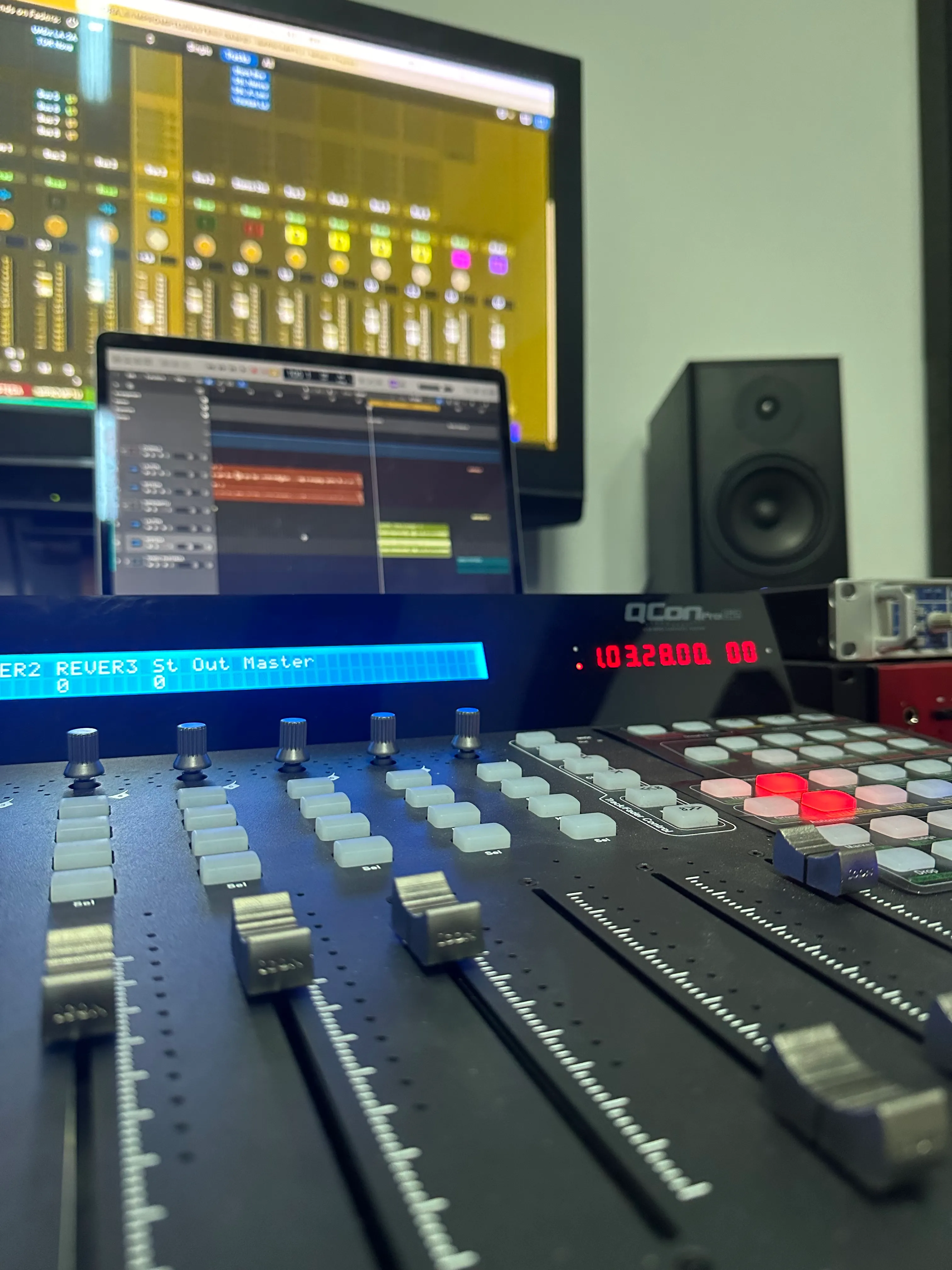
When working on a master I’m not aiming for a particular number on a meter. The starting point is the character of the song and where it will be released. I combine digital tools with analog studio hardware.
If you’re preparing a song for release, also read about the difference between mixing and mastering.
Have a finished mix? Write to me and we’ll talk about mastering your song.